
House of Flowers: Inside Tito's Final Resting Place
July 10, 2025

I spent about two hours exploring the House of Flowers, walking through Tito's personal exhibits and feeling the weight of Yugoslavia's complex history. The museum's intimate collection of personal artifacts and the peaceful garden surrounding Tito's tomb made the visit a surprisingly reflective experience.
Where a communist leader's final resting place reveals the personal story behind Yugoslavia's most controversial political figure. Step inside Tito's world - a mausoleum that's part memorial, part time capsule, and completely unexpected.
Need-to-Know Info Before Visiting House of Flowers


3+
images
House of Flowers Address
Mihajla Pupina 10, 11070 Belgrade, Serbia
House of Flowers Opening Hours
- 🕒 Tuesday-Sunday: 10:00 AM - 6:00 PM
- 🕒 Closed on Mondays
- 🕒 Last entry: 5:30 PM
How to get to House of Flowers
- 🚗 By car: Parking available on-site
- 🚌 Public transport: Bus 53 and 56 from city center
- 🚕 Rideshare: Uber and local taxi services available
What is House of Flowers known for?
- Final resting place of Yugoslav leader Josip Broz Tito
- Part of the Museum of Yugoslav History complex
- Contains personal artifacts and memorabilia from Tito's life
- Showcases Yugoslavia's political history during Cold War era
- Features a peaceful memorial garden surrounding the mausoleum
What is House of Flowers in Belgrade?
The House of Flowers stands as a powerful historical landmark in Belgrade that transforms a political leader's final resting place into a fascinating museum experience. Located in the quiet Dedinje neighborhood, this site attracts history buffs and curious travelers eager to understand Yugoslavia's complex past. Tourists can walk through the exact location where Josip Broz Tito, Yugoslavia's long-time president, is buried alongside his wife Jovanka Broz. The museum complex goes beyond a typical memorial, offering visitors a deep dive into the personal and political life of one of the 20th century's most controversial leaders. International travelers find the site particularly compelling because it provides unfiltered insights into the socialist era of Yugoslavia. Photography is allowed in most areas, making it a popular spot for those wanting to document Cold War-era history. The museum receives around 100,000 visitors annually, with international guests making up approximately 30% of that number. Visitors typically spend between 1-2 hours exploring the indoor exhibits and the surrounding gardens, which offer a tranquil setting for reflection on Yugoslavia's complicated historical narrative.
Top things to do at House of Flowers
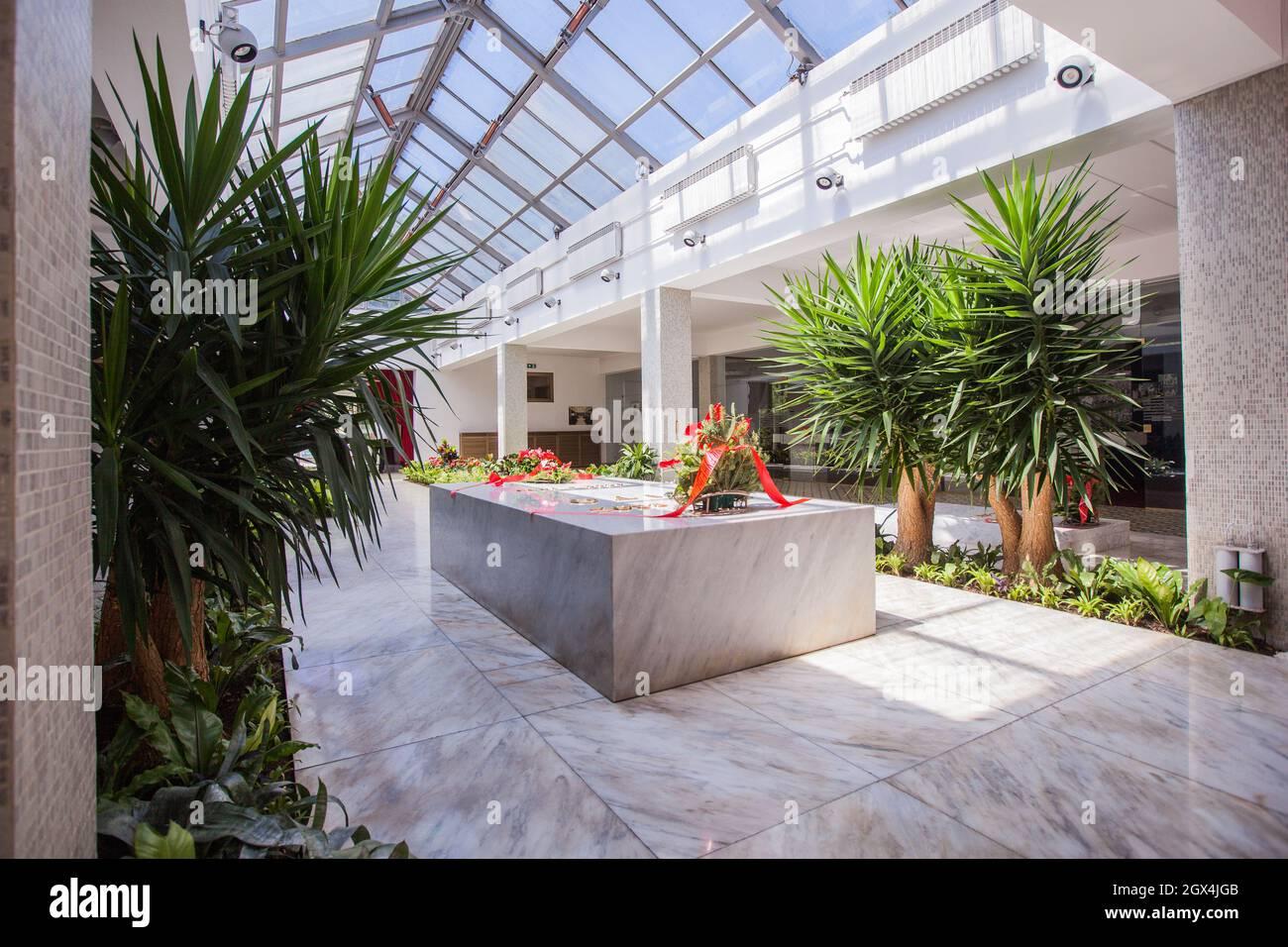
- View Tito's original burial site inside the glass-enclosed marble room, where flowers are still placed daily by visitors
- Explore the permanent exhibition showcasing Tito's personal artifacts, including his military uniforms, diplomatic gifts, and personal photographs
- Walk through the surrounding Museum of Yugoslav History grounds to see additional exhibits about Yugoslavia's political history
- Observe Tito's collection of state awards and international decorations from over 60 countries he received during his leadership
- Visit the memorial garden where Tito and his wife Jovanka are buried, featuring carefully maintained flower beds and landscaping
- Check out the rotating temporary exhibitions that provide deeper context about Yugoslavia's social and political transformation
- Participate in the guided tour available in multiple languages, offering detailed insights into Tito's life and political legacy
Tickets and Entry
Adult tickets cost 500 Serbian dinars (approximately €4.50). Students and seniors receive a 50% discount. Online tickets can be purchased through the Museum of Yugoslav History website, which helps avoid long queues. The ticket includes entry to the House of Flowers and the surrounding museum grounds. Audio guides are available in English, Serbian, and German for an additional 200 dinars.
History of House of Flowers
- 1974: Tito commissions the House of Flowers as his personal residence and future mausoleum
- 1980: Tito dies on 4 May, and is buried in the House of Flowers
- 1982: The site is officially opened to the public as a memorial museum
- 1990s: After Yugoslavia's dissolution, the museum becomes a historical documentation center
- 2012: Major renovations update the museum's exhibitions and preservation techniques
- 2020: Digital archives and interactive displays added to modernize the visitor experience
Cultural Significance
The House of Flowers represents more than a burial site. It symbolizes the complex legacy of Yugoslavia and Tito's leadership. For many older Serbians, it's a place of historical remembrance, while younger generations view it as a window into their country's socialist past. The museum plays a crucial role in helping visitors understand the political and social dynamics of mid-20th century Yugoslavia.
Tips for Visitors
- Allow 1-2 hours for a complete museum experience
- Photography is permitted in most areas, but flash is not allowed
- Wear comfortable walking shoes as the museum grounds are extensive
- English-language tours are available twice daily at 11 AM and 3 PM
- Bring water and snacks, as on-site dining options are limited
- Check the museum website for potential temporary exhibition closures
What are some interesting facts about House of Flowers?
- Tito designed the mausoleum himself, wanting a space that reflected his vision of a peaceful, harmonious environment with extensive flower gardens
- The museum contains over 200 personal gifts from world leaders, including a Rolls-Royce from the British government and exotic art pieces from African nations
- Despite being a memorial to a communist leader, the House of Flowers was actually quite luxurious, featuring marble floors, high-end furniture, and sophisticated architectural design that contrasted with typical socialist architecture